
Advanced MBR & UF Membrane Technology
Leading manufacturer of high-performance membrane bioreactors, ultrafiltration systems, and MABR solutions for industrial and municipal wastewater treatment.
This page is not the official website. Generated by AI, does not constitute any advice. If needed, please click here to visit the corresponding official website.
Leading manufacturer of high-performance membrane bioreactors, ultrafiltration systems, and MABR solutions for industrial and municipal wastewater treatment.
Oxymo Technology is a professional MBR & UF water filter membrane manufacturer with over 15 years of specialization in research, development, manufacturing, and applications of Ultrafiltration (UF) Membrane hollow fiber technology for water and wastewater treatment.
As a high-tech company, we provide comprehensive package sewage treatment plant solutions including design, sales, manufacturing, technology guidance, water & wastewater solutions, and aftersale services. Our R&D expertise places us at the forefront of UF material formulation, production technology, and membrane applications.
We have successfully completed hundreds of sewage treatment plants, wastewater treatment plants, and water treatment projects in approximately 40 countries worldwide, serving municipal, domestic, and diverse industrial sectors.

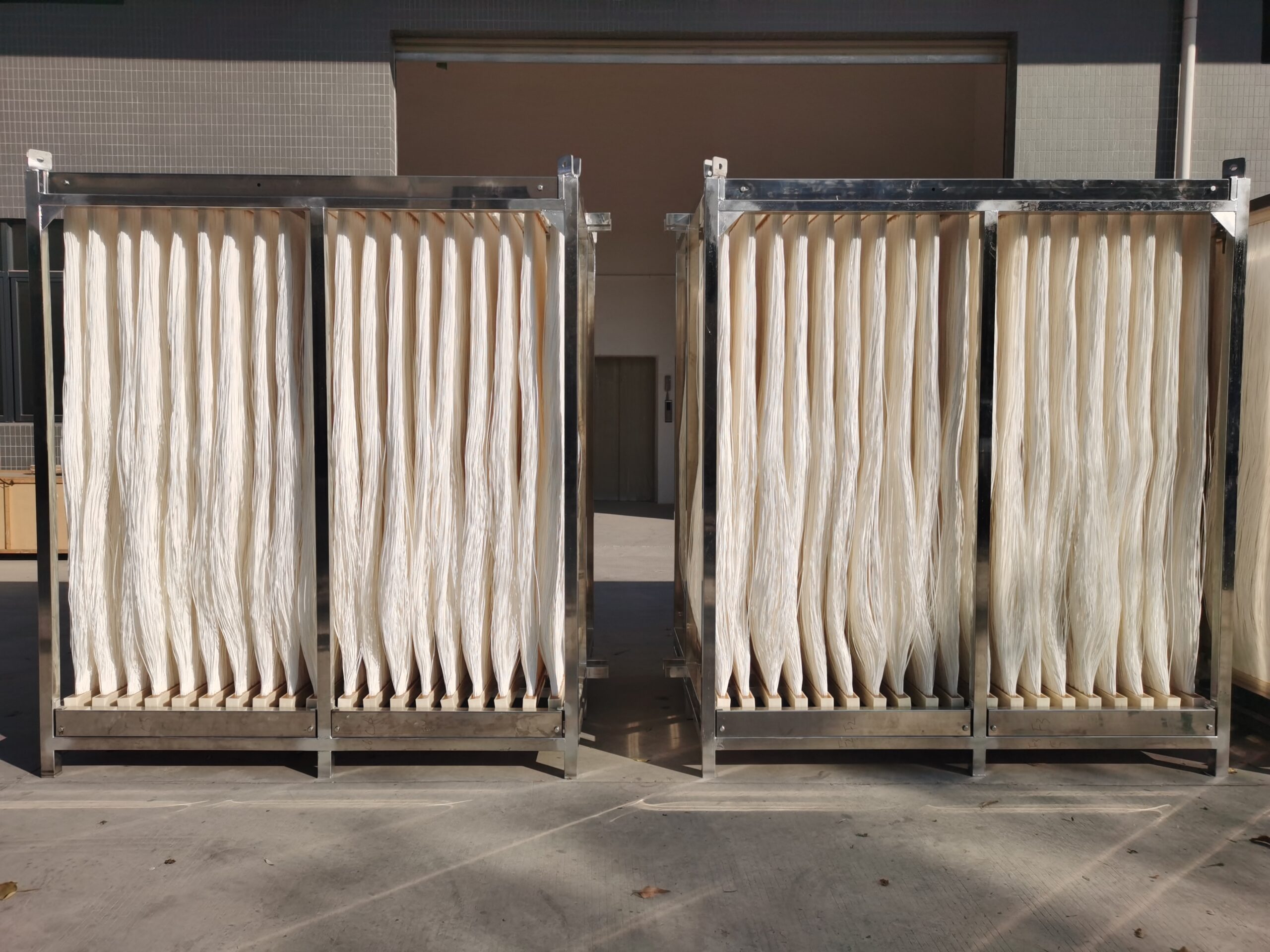
Over 15 years of specialization in ultrafiltration membrane technology
No fiber breakage, high anti-peeling strength, with stretching rate up to 300%. Our membranes withstand rigorous operational conditions.
Designed for durability with a service life of 5-8 years, reducing replacement frequency and lifecycle costs.
Small footprint design ideal for space-constrained installations while maintaining high treatment capacity.

Bubbleless oxygen transfer membrane technology that enhances biological treatment efficiency while reducing energy consumption.

Enhanced Biological Oxygen Reduction system specifically designed for natural water body restoration and pollution control.

Innovative wavy design increases surface area and improves fouling resistance for enhanced filtration performance.
High-performance hollow fiber membranes available in PVDF, PAN, PS/PES with various pore sizes for diverse applications.
Advanced membrane processes for ammonia removal and water purification through selective separation technologies.
Chemically resistant PTFE membranes ideal for harsh industrial wastewater applications with extreme pH conditions.
Complete prefabricated sewage treatment systems incorporating MBR technology for rapid deployment and reliable operation.
Energy-efficient filtration systems that operate without pumps, utilizing gravity for sustainable water treatment.
Complete manufacturing lines for producing hollow fiber and flat sheet membranes with precise control over specifications.
Continuous innovation in membrane materials including Embedded-reinforced PVDF, Alloy-PVC, PAN and PS/PES
CE certified products with ISO9001/ISO14001 compliant production and operational standards
Hundreds of successful installations across approximately 40 countries worldwide
Serving diverse industries including pharmaceutical, food, chemical, oil field, and textile
Yes, ultrafiltration can effectively remove bacteria from water. The semi-permeable membrane used in UF has very small pores (typically 0.01-0.1 microns) that are smaller than most bacteria, which range from 0.2 to 10 microns in size. This allows water and dissolved substances to pass through while retaining bacteria, viruses, and other microorganisms in the retentate stream.
Ultrafiltration (UF) and Reverse Osmosis (RO) are both membrane filtration processes but differ in pore size and separation capabilities. UF membranes have larger pores (0.01-0.1 microns) and remove suspended solids, bacteria, and large molecules while allowing dissolved salts and small organic molecules to pass through. RO membranes have much smaller pores (approximately 0.0001 microns) and can remove dissolved salts, ions, and most organic molecules, producing nearly pure water. RO requires higher pressure and energy than UF.
Membrane reactors combine chemical reaction and separation in a single unit, offering several advantages: improved reaction efficiency by continuously removing products (shifting equilibrium), higher selectivity, reduced byproduct formation, smaller equipment footprint, lower energy consumption, and the ability to perform reactions that would not be feasible in conventional reactors. They are particularly beneficial for hydrogenation, dehydrogenation, and esterification processes.
Liquid wastes are treated through a series of physical, chemical, and biological processes. Primary treatment removes solids through screening and sedimentation. Secondary treatment uses biological processes (like activated sludge or MBR systems) to break down organic matter. Tertiary treatment further polishes the water through filtration, nutrient removal, or disinfection. Membrane technologies like MBR and UF provide advanced treatment by combining biological processes with physical filtration for high-quality effluent.
Contact us to learn more about our membrane solutions and how we can help with your water and wastewater treatment needs.
Notice for Buyers: If you are a buyer, the above information is generated by AI collection and does not constitute any advice. If necessary, please visit the corresponding official website.
For Domain Owners: If you are the domain owner and do not want to be included by fobcompany.info, please contact [email protected] via your corporate email to cancel. We will cancel your inclusion within 3 business days.
如果您是域名所有者 不想被fobcompany.info收录 请用企业邮箱联系[email protected] 取消收录 我们将在3个工作日取消您的收录
Service Request: If you are other domain and want to be included, please contact [email protected]
如果您是其他域名合作 也请联系[email protected]